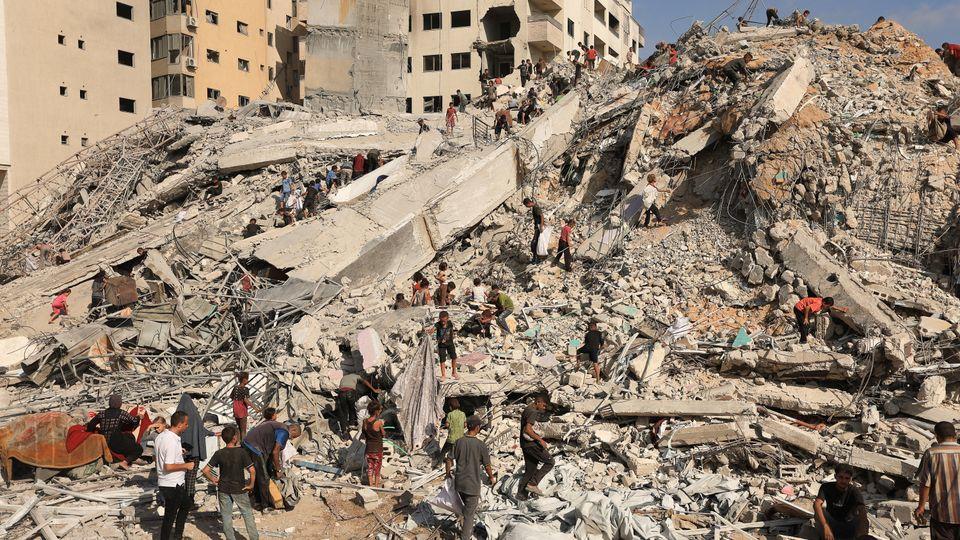
In a landmark move, Palestinian groups have formally petitioned the United Kingdom for reparations, asserting that the ongoing humanitarian crisis in Gaza is a direct consequence of the 1917 Balfour Declaration. The petition, highlighted by Middle East Eye, frames the historic British policy- which endorsed the establishment of a “national home for the Jewish people” in Palestine-as a foundational injustice leading to decades of conflict and displacement. This development marks a significant escalation in calls for accountability over colonial-era decisions whose effects continue to resonate in the geopolitical struggles of the Middle East today.
Palestinians Demand Accountability as Petition Calls on UK to Address Balfour Declaration Legacy
Palestinians across multiple cities have united in calling on the UK government to confront and atone for its role in the historical injustices stemming from the 1917 Balfour Declaration. The petition, gaining momentum on social media and through grassroots campaigns, demands formal recognition of the declaration’s long-standing impact on Palestinian displacement and the ongoing humanitarian crisis in Gaza. Activists argue that this document, which promised support for a Jewish homeland in Palestine, directly catalyzed decades of strife, forced migration, and regional instability.
Key demands outlined in the petition include:
- Official UK government apology for the consequences of the Balfour Declaration
- Concrete reparations to support Palestinian rebuilding and refugee aid
- Commitment to international diplomatic pressure aimed at resolving the Israeli-Palestinian conflict
| Aspect | Petition Request | UK Government Response Status |
|---|---|---|
| Formal Apology | Issued in Parliament | Pending |
| Financial Reparations | Fund Palestinian Infrastructure | No Commitment |
| Historical Education | Curriculum Inclusion | Under Review |
Historical Roots of Gaza Conflict Explored Through Colonial Policies and Their Lasting Impact
At the heart of the Gaza conflict lies a tangled history shaped by colonial ambitions and unsigned promises, notably the 1917 Balfour Declaration. This landmark British policy, which expressed support for a “national home for the Jewish people” in Palestine, set into motion a series of political and demographic changes that Palestinians argue sowed the seeds for decades of displacement and dispossession. The declaration’s failure to acknowledge the rights and voices of the indigenous Arab population fueled tensions that erupted into long-lasting strife, with Gaza becoming one of the most densely populated and embattled territories as a direct consequence.
Historical narratives emphasize several colonial-era legacies that continue to define Gaza’s enduring struggles:
- Displacement and Land Confiscation: Patterns initiated during British Mandate rule accelerated land ownership transfers, leading to large-scale Palestinian displacements.
- Administrative Fragmentation: Colonial policies created fragmented governance structures, complicating future self-determination efforts.
- Security and Military Impositions: The militarization of the region introduced by colonial administrations entrenched cycles of violence and retaliation.
| Colonial Policy | Impact on Gaza | Long-term Consequence |
|---|---|---|
| Balfour Declaration (1917) | Legitimized Zionist settlement | Demographic shifts, conflicts |
| British Mandate Land Laws | Land expropriations | Mass displacement |
| 1948 Nakba | Mass refugee influx into Gaza | Humanitarian crisis |
Experts Recommend Formal UK Apology and Reparations to Foster Reconciliation and Justice
Leading historians and human rights advocates are urging the UK government to formally acknowledge its role in the historic injustices that have fueled decades of conflict in the region. They argue that a genuine apology, coupled with a comprehensive reparations framework, is essential to begin healing deep-seated wounds and fostering meaningful reconciliation. This approach, experts maintain, would not only address the moral debts accumulated over a century but also reinforce the UK’s commitment to justice and international accountability.
Key recommendations put forward include:
- A public formal apology recognizing the consequences of the Balfour Declaration
- Financial reparations aimed at supporting Palestinian development and refugee assistance
- Educational initiatives to promote historical awareness and cultural understanding in the UK
- Collaboration with international bodies to facilitate dialogue and peace-building efforts
| Aspect | Proposed Action | Expected Impact |
|---|---|---|
| Official Apology | Government declaration recognizing historic harms | Establish moral accountability |
| Reparations | Monetary aid and infrastructure investment | Support economic recovery |
| Education | Curriculum reforms & public awareness campaigns | Foster empathy and historical truth |
| International Cooperation | Partnerships with UN and peace organizations | Advance regional stability |
The Way Forward
As Palestinians renew calls for reparations, citing the Balfour Declaration as a foundational cause of their ongoing displacement and suffering, the debate over historical accountability continues to gain international attention. The UK government faces mounting pressure to address these grievances amid growing demands for justice and acknowledgment of past actions. How the British authorities respond may shape future dialogue on historical responsibility and the prospects for peace in the region.