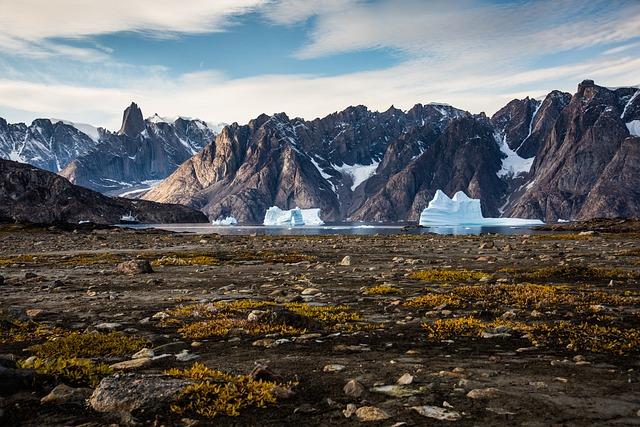
Europe faces mounting strategic challenges as Margrethe Vestager, European Commissioner for Competition, issues a stark warning about the growing threat posed by developments in Greenland. Speaking to Euronews.com, Vestager described the situation as “existential” for NATO, underscoring the island’s critical geopolitical importance amid rising global tensions. This article delves into the implications of Vestager’s statement, examining how Greenland has become a focal point in the evolving security landscape of Europe and the transatlantic alliance.
Europe Faces New Security Challenges as Vestager Highlights Greenland’s Strategic Role
Margrethe Vestager, the European Commission’s Executive Vice-President, has underscored the critical importance of Greenland in Europe’s evolving security landscape, describing emerging threats in the Arctic region as “existential” for NATO. With increased geopolitical competition among global powers, Greenland is rapidly transforming from a remote Arctic island into a strategic hub. NATO’s interest in the region has intensified, particularly due to its key position controlling access between the North Atlantic and the Arctic Ocean, which is opening new maritime routes and military frontiers.
Key aspects of Greenland’s strategic significance include:
- Geopolitical leverage: Control of Arctic passages offers tactical advantages in surveillance and military deployment.
- Resource potential: Rich reserves of rare earth minerals and hydrocarbons boost economic and strategic value.
- Climate impact: Melting ice accelerates accessibility, increasing both opportunities and vulnerabilities.
| Factor | Impact on Security | NATO Response |
|---|---|---|
| New Arctic Sea Routes | Enhanced naval mobility | Increased patrols and monitoring |
| Resource Exploration | Heightened competition | Strategic partnerships with Greenland |
| Russian Military Presence | Direct threat to NATO interests | Bolstered defense infrastructure |
Implications of Greenland’s Geopolitical Threat for NATO’s Future Defense Posture
NATO’s strategic calculus is undergoing a profound shift as Greenland’s geopolitical significance escalates. This vast Arctic territory, traditionally viewed through the lens of environmental and scientific interest, now represents a crucial vantage point in the contest for Arctic dominance. The implications for NATO’s future defense posture are multifaceted: base infrastructure modernization, enhanced early warning systems, and increased joint exercises in extreme cold weather are becoming non-negotiable priorities. Greenland’s location offers direct access to key air and maritime routes, making it a potential flashpoint amid rising great power competition, particularly with increasing Russian and Chinese activity in the Arctic sphere.
In response, NATO must recalibrate its force deployments and invest in new command-and-control frameworks that prioritize Arctic readiness. Key areas of focus include:
- Strengthening alliances with Nordic countries and the U.S., who maintain strategic interests in Greenland;
- Developing advanced surveillance technologies tailored to Arctic conditions;
- Prioritizing rapid mobility of troops and assets through ice-capable airlift and naval support.
| Strategic Focus | Planned NATO Action | Expected Outcome |
|---|---|---|
| Arctic Base Upgrades | Invest €1B in infrastructure by 2026 | Enhanced rapid deployment capability |
| Surveillance & ISR | Deploy advanced drones and satellites | Improved situational awareness |
| Joint Exercises | Increase frequency by 50% | Operational readiness in Arctic conditions |
Recommendations for Strengthening NATO’s Arctic Strategy and Alliance Cohesion
To effectively counter the multidimensional challenges posed by the Arctic, NATO must prioritize greater strategic coordination among member states, particularly those bordering the region. Emphasizing joint intelligence-sharing initiatives and enhancing military interoperability will be crucial to deter potential threats and assert a unified stance. Moreover, investing in advanced surveillance technologies and rapid-response capabilities ensures NATO’s ability to monitor expanding Russian and Chinese activities, safeguarding critical sea lanes and resources in the High North.
Equally important is reinforcing alliance cohesion through inclusive policymaking that integrates the concerns of Arctic-adjacent nations while promoting transatlantic dialogue. A transparent framework for resource-sharing and environmental protection can bridge divergent national priorities, fostering trust and collective resilience. Below is a summary of strategic pillars to bolster NATO’s Arctic posture:
| Strategic Pillar | Key Focus Areas |
|---|---|
| Enhanced Collaboration | Joint Exercises, Intelligence Sharing, Arctic Command Integration |
| Technological Advancements | Surveillance Drones, Satellite Reconnaissance, Cyber Defense |
| Environmental & Resource Policy | Climate Security, Sustainable Exploitation, Indigenous Partnerships |
Final Thoughts
As tensions continue to rise in the Arctic, Vestager’s stark warning underscores the urgent need for NATO members to reevaluate their strategic priorities concerning Greenland. With its critical geopolitical position and abundant resources, the island remains a focal point of global power dynamics. How NATO responds to these challenges will be pivotal in shaping the future security landscape of Europe and beyond. Euronews will continue to monitor developments closely.