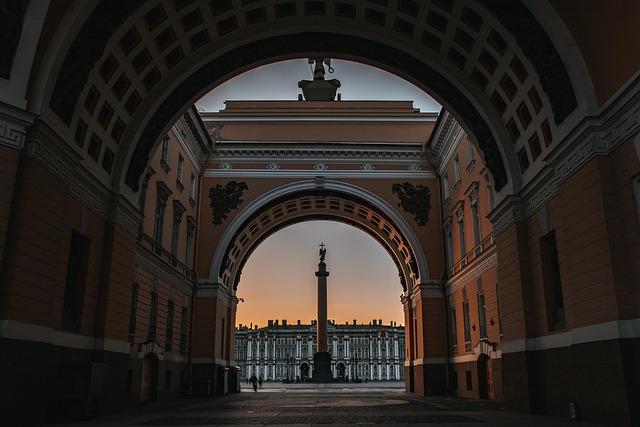
St. Petersburg: A Tapestry of Tsars, Revolution, and Cultural Renaissance
In the heart of Russia lies St. Petersburg, a city steeped in history and brimming with cultural significance. Founded by Peter the Great in 1703 as a statement of Russia’s ambitions to become a leading European power, St. Petersburg has played host to a dynamic array of events, from the grandeur of imperial rule to the fervor of revolutionary movements. This vibrant metropolis has served as a backdrop for key historical moments, including the 1917 Bolshevik Revolution, forever altering the course of Russian history. Beyond its political narrative, the city is a cultural epicenter renowned for its exquisite architecture, world-class museums, and a thriving arts scene that continues to influence generations. In this exploration, we delve into the intertwining tales of tsars, revolutionaries, and the rich tapestry of culture that defines St. Petersburg-a city that remains a living testament to the complexities of Russian identity.
Exploring the Imperial Legacy of St. Petersburg’s Tsars
The imperial legacy of St. Petersburg, shaped by centuries of tsarist rule, can be perceived in its grand architecture, cultural institutions, and the profound historical narratives that linger in the air of the city. Each ruler left an indelible mark, transforming St. Petersburg into a showcase of imperial ambition and grandeur. Notable examples of this legacy include:
- The Winter Palace – A symbol of imperial opulence and the home of the Hermitage Museum, containing millions of artworks.
- Peterhof – Known as the “Russian Versailles,” featuring stunning gardens and cascading fountains designed to impress visitors.
- St. Isaac’s Cathedral – An architectural marvel with an awe-inspiring dome, reflective of the city’s spiritual aspirations under the tsars.
The interplay between the imperial past and revolutionary sentiments intensified as St. Petersburg witnessed significant upheaval. Following the events of 1917, where the Bolsheviks seized power, the remnants of the tsars faced transformation into symbols of a new ideology. The city itself became a stage for revolutionary actions and cultural shifts. Key changes included:
- Renaming streets and squares – Many sites, previously honoring the tsars, were rebranded to reflect revolutionary heroes.
- Establishment of institutions – New cultural and educational institutions arose, aiming to democratize knowledge and promote socialist values.
- City planning – Urban development strategies shifted, illustrating the defined split between imperial heritage and a new socialist vision.
Unpacking the Revolutionary Spirit That Shaped Modern Russia
The transformation of Russia into a modern state was profoundly influenced by an intricate tapestry of revolutionary fervor woven through its history. From the Decembrist revolt in 1825, which sought to challenge autocratic rule, to the Bolshevik Revolution of 1917, these insurrections were not merely political events; they encapsulated a broader longing for freedom and reform. St. Petersburg, once the imperial capital, became a central stage for these revolutionary movements, with its grand avenues echoing the calls for change. The very fabric of the city, characterized by baroque architecture and art that symbolized the spirit of innovation, served as a backdrop for significant historical milestones that continue to resonate in Russia today.
Moreover, the cultural landscape of St. Petersburg offers insight into the revolutionary ethos that permeated the nation. The literary giants, such as Fyodor Dostoevsky and Leo Tolstoy, explored the struggles of the human spirit against oppression, reflecting a society at the crossroads of tradition and modernity. Artistic movements, including Russian Constructivism, emerged from this climate of upheaval, melding form and ideology to reflect the aspirations of the populace. This intermingling of art, literature, and political activism established St. Petersburg not only as a cultural heartland but also as a crucible for revolutionary ideas that continue to shape contemporary Russian identity.
Celebrating St. Petersburg’s Cultural Scene: A Guide to Its Hidden Gems
St. Petersburg, a city steeped in history, is home to an array of cultural wonders beyond the well-trodden paths of the Hermitage and the Church of the Savior on Spilled Blood. For those willing to explore off the beaten track, the city’s hidden gems reveal a vibrant tapestry of art, music, and local traditions. The Sergei Kuryokhin Modern Art Center, for instance, stands as an avant-garde hub for experimental art and music, regularly hosting multimedia exhibitions that challenge the conventional. Additionally, the atmospheric Rumyantsev Museum, often overlooked by tourists, offers an intimate glimpse into Russian history, showcasing a collection of unique artifacts and rotating exhibitions focused on lesser-known historical narratives.
Beyond visual arts, St. Petersburg’s thriving theater scene is not just limited to the grand Marinsky. Experimental theaters such as the Lensovet Theatre and Kritik Theatre present bold interpretations of classic and contemporary works, engaging audiences with innovative staging and fresh talent. For aficionados of literature and poetry, the Anna Akhmatova Museum at Fountain House provides a serene refuge, celebrating the life and work of one of Russia’s most cherished poets. Here, visitors can step inside the writer’s former residence and immerse themselves in the atmosphere that inspired her artistry. Discovering these hidden cultural treasures can deeply enhance your experience of St. Petersburg, transforming a conventional visit into a rich tapestry of artistic delight.
| Location | Type | Highlight |
|---|---|---|
| Sergei Kuryokhin Modern Art Center | Art & Music | Experimental exhibitions |
| Rumyantsev Museum | History | Unique artifacts |
| Lensovet Theatre | Theater | Innovative performances |
| Anna Akhmatova Museum | Literary | Poet’s former residence |
Final Thoughts
In conclusion, St. Petersburg stands as a testament to the intricate tapestry of history, embodying the legacies of tsars, the fervor of revolutionaries, and the vibrancy of culture that has thrived within its storied streets. From its founding by Peter the Great in 1703 to its role as a crucible for social change, the city remains a focal point for understanding Russia’s complex identity. With its rich art scene, revolutionary past, and architectural grandeur, St. Petersburg offers a glimpse into the resilience and creativity of its people. As we continue to explore the depths of this enthralling city, one thing remains clear: St. Petersburg is not merely a destination, but a dynamic narrative of progress, struggle, and artistic expression that continues to inspire both ardent historians and casual visitors alike.