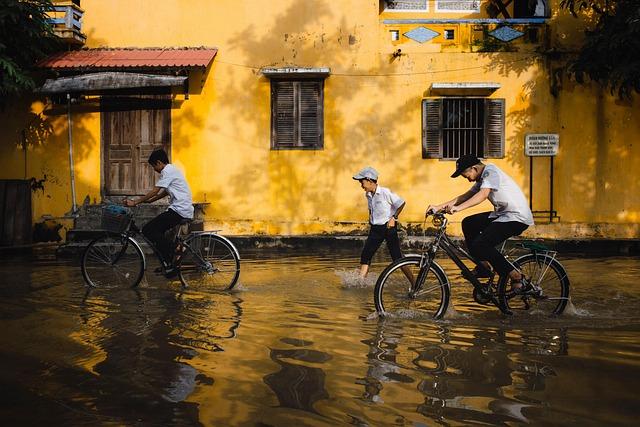
Greater Accra, Ghana’s bustling metropolitan hub, is facing an escalating threat from urban flooding as climate change and rapid population growth converge. New research published in Nature highlights how rising flood risks, compounded by socioeconomic developments outlined in shared pathways scenarios, could dramatically increase the city’s exposure to devastating water-related disasters. As Accra expands and transforms, experts warn that without targeted intervention, millions could be increasingly vulnerable to flooding’s economic and humanitarian impacts in the coming decades. This study underscores the urgent need for integrated urban planning and climate resilience strategies to safeguard one of West Africa’s fastest-growing urban centers.
Rising Urban Flood Risk Threatens Greater Accra’s Rapid Growth
Rapid urbanization in Greater Accra has accelerated land-use changes that disrupt natural water flow and reduce the efficacy of existing drainage systems. As the city expands, informal settlements and new developments are often sited in flood-prone areas, amplifying vulnerability to extreme rainfall events. Recent studies highlight that under emerging socioeconomic trends, there will be a significant increase in both flood frequency and intensity, posing direct threats to infrastructure, economic assets, and public health. The combination of climate change and unmanaged urban growth is creating a compounding effect, placing millions at risk of severe flooding in the coming decades.
Key factors contributing to this increased exposure include:
- Inadequate urban planning that fails to integrate flood risk management
- Expansion of impervious surfaces reducing natural infiltration
- Insufficient investment in modern drainage and early-warning systems
- Population growth driving development into vulnerable zones
Data projections under multiple socioeconomic pathways reveal that without urgent adaptive strategies, flood-related damages could escalate, severely hampering Greater Accra’s ambition for sustainable growth. The following table summarizes potential flood risk increases correlated with demographic growth scenarios:
| Scenario | Population Growth (%) | Flood-Prone Area Increase (%) | Estimated Economic Loss (USD million) |
|---|---|---|---|
| Moderate Growth | 35 | 40 | 120 |
| High Growth | 60 | 75 | 250 |
| Unmanaged Growth | 85 | 110 | 400 |
Understanding Socioeconomic Drivers Behind Increasing Flood Exposure
Rapid urbanization in Greater Accra is a primary factor amplifying flood exposure, driven largely by socioeconomic forces that shape land use patterns and settlement distribution. As the population grows, informal settlements tend to expand into flood-prone areas due to limited affordable housing options. This urban sprawl, coupled with inadequate infrastructure, overwhelms drainage systems and exacerbates flooding events. Furthermore, economic disparities push lower-income communities to settle in vulnerable zones, where the risk of flood damage is highest but resilience mechanisms are weakest.
Several interconnected socioeconomic drivers contribute notably to this trend:
- Population Growth: Increasing numbers escalate demand for housing and services, intensifying pressure on flood-sensitive land.
- Income Inequality: Limits adaptive capacity for disadvantaged groups, restricting their ability to relocate or retrofit homes.
- Urban Planning Gaps: Lack of enforcement and foresight in land use regulations facilitates high-risk construction in flood plains.
- Economic Activities: Expansion of commercial and industrial areas in flood zones often prioritizes economic gain over environmental safety.
| Socioeconomic Factor | Impact on Flood Risk | Observed Trend in Greater Accra |
|---|---|---|
| Population Density | Increased runoff and reduced absorption | 6% annual growth rate in urban suburbs |
| Income Level | Resilience and adaptive capacity | High poverty in flood-prone communities |
| Land Use Regulation | Controls on development in flood zones | Weak enforcement, frequent informal settlements |
Strategies for Building Resilient Infrastructure and Community Preparedness
To mitigate the escalating threats posed by urban flooding in Greater Accra, authorities and stakeholders must prioritize the integration of innovative engineering solutions with ecosystem-based approaches. This includes the reinforcement of drainage systems, the construction of permeable pavements, and the restoration of natural wetlands to enhance water absorption and delay runoff. Urban planners are encouraged to adopt adaptive infrastructure designs that account for future climate variability, ensuring flexibility and durability in flood defenses. Moreover, community-based green infrastructure such as rain gardens and urban forests can significantly augment the city’s capacity to manage heavy rainfall events while improving air quality and urban aesthetics.
- Upgrade drainage networks with climate-resilient technology
- Restore mangrove ecosystems along coastal zones
- Implement early-warning systems using real-time data analytics
- Promote community-led monitoring and rapid response training
- Create flood-resilient building codes tailored to local risk profiles
Equipping local communities with the knowledge and resources to respond effectively during flood events is equally critical. Public education campaigns and participatory workshops can increase awareness of risk factors and foster a culture of preparedness. Establishing neighborhood-based emergency committees facilitates swift coordination in times of crisis, reducing potential loss of life and property. Collaboration between government agencies, NGOs, and residents enhances trust and ensures that response strategies are both inclusive and context-specific. Additionally, investment in accessible communication channels enables timely dissemination of warnings, empowering citizens to take protective action in real time.
| Strategy | Key Action | Expected Impact |
|---|---|---|
| Infrastructure Upgrades | Climate-proof drainage expansion | Reduced urban flood incidence |
| Community Engagement | Emergency drills and education | Faster response times |
| Green Infrastructure | Tree planting and wetland restoration | Improved natural water absorption |
Closing Remarks
As Greater Accra continues to expand and evolve, the growing threat of urban flooding poses a critical challenge for policymakers, urban planners, and residents alike. This latest research underscores the urgent need for integrated strategies that consider both socioeconomic development and climate vulnerabilities. Addressing these risks proactively will be essential to safeguarding communities, infrastructure, and the region’s future growth. As Accra steps into an uncertain climate future, the findings serve as a timely reminder: resilience must be built not just into the city’s landscape, but into its planning and decision-making processes.