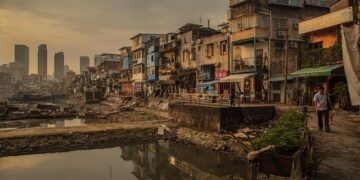
Growth Without Freedom: Bangladesh’s Precarious Path to the 2026 Election
As Bangladesh approaches its pivotal 2026 national elections, the nation finds itself at a critical crossroads marked by rapid economic growth juxtaposed with increasing political repression. While the country has made impressive strides in sectors such as textiles and remittances, enabling it to emerge as one of Asia’s fastest-growing economies, this progress comes with a significant caveat: the erosion of democratic freedoms. Human rights organizations and political analysts are raising alarms about the diminishing space for dissent, crackdowns on opposition parties, and a media landscape increasingly stifled by government intervention. In this article, we delve into the complexities of Bangladesh’s burgeoning economy and the troubling trends of authoritarianism that threaten to undermine its democratic framework, setting the stage for a contentious electoral battle in 2026.
Economic Expansion Amidst Diminished Democratic Spaces
Bangladesh is experiencing a striking paradox as its economy shows remarkable growth amidst significant curtailments of democratic freedoms. The nation has witnessed impressive GDP growth rates, propelled by factors such as increased foreign investments, a booming textile industry, and a burgeoning digital economy. However, this economic success is overshadowed by a troubling political landscape characterized by suppressive governance tactics that stifle dissent and curb civic engagement. The government’s maneuvering has raised concerns among human rights advocates about the sustainability of this growth, as political repression often breeds social instability, threatening the very foundations of economic progress.
The impending 2026 elections loom large over the country, posing critical questions about the intersection of economic resilience and democratic principles. Observers note that key elements of a healthy democracy-such as a free press, independent judiciary, and robust civil society engagement-are increasingly under siege. Some pivotal aspects include:
- Media Censorship: Journalists face harassment and intimidation, leading to self-censorship and a lack of diverse perspectives in public discourse.
- Polarized Politicking: The political landscape is sharply divided, with opposition parties often marginalized, leading to a stifled electoral process.
- Public Dissent Suppression: Peaceful protests are frequently met with police violence, discouraging civic participation and public engagement.
The relationship between economic advancement and democratic governance in Bangladesh reveals a critical dilemma. While international investors are captivated by the growth trajectory, uncertainty about political freedoms casts a shadow over the long-term viability of this prosperity. The international community must grapple with its role in fostering economic development while advocating for the restoration of democratic norms-a challenge that will ultimately shape the future of Bangladesh as it heads toward the crucial electoral cycle.
The Role of Civil Society in Safeguarding Electoral Integrity
As Bangladesh approaches its pivotal 2026 elections, the significance of civil society organizations takes center stage in fostering electoral integrity. These entities serve as essential watchdogs, advocating for transparency and accountability in the electoral process. Their work encompasses a variety of tasks, including:
- Monitoring electoral practices: Civil society groups often deploy observers to polling stations, ensuring fair conduct and reporting discrepancies.
- Voter education: They engage in initiatives to inform citizens about their voting rights, processes, and the importance of participation.
- Advocacy for reforms: By influencing policy changes, these organizations push for legal frameworks that promote free and fair elections.
The role of civil society extends beyond mere observation; it shapes the narrative around electoral integrity and democracy. In a landscape characterized by political tension and potential suppression, their efforts aim to provide a counterbalance to state powers that may undermine democratic ideals. Recent reports indicate that civil society’s interventions have been vital in:
| Key Contributions | Impact |
|---|---|
| Raising public awareness | Increased voter turnout and civic engagement |
| Facilitating dialogues | Building trust between electoral bodies and citizens |
| Documenting electoral fraud | Holding authorities accountable and demanding justice |
International Pressure and Diplomatic Engagement for Sustainable Reform
As Bangladesh gears up for its 2026 elections, the spotlight on its political climate is increasingly influenced by international actors advocating for democratic reforms. Key players such as the European Union, United States, and United Nations have stepped up their calls for fair electoral processes and enhanced human rights protections. The necessity for a renewed dialogue on governance is underscored by ongoing concerns regarding political repression, media censorship, and civil society activism. These diplomatic efforts aim not only to promote accountability but also to ensure that the electoral process is transparent and inclusive.
In response to this mounting international pressure, the Awami League government has begun hinting at potential reforms, though observers remain skeptical about their sincerity. Important components of potential adaptations include:
- Strengthening electoral commissions to enhance their independence
- Implementing media freedom laws to encourage diverse political discourse
- Ensuring safety for opposition parties during the election campaign
However, analysts warn that without genuine commitment from the ruling party and increased engagement from global partners, any reforms may merely serve as a facade to placate critics. A concerted effort to push for sustainable change remains critical to achieving a more democratic Bangladesh.
To Wrap It Up
As the 2026 elections approach, Bangladesh finds itself at a critical juncture, grappling with the paradox of remarkable economic growth overshadowed by political repression and curtailment of civil liberties. The resilience of its citizenry and the strategic maneuvering of the ruling party highlight the complexities of a nation striving for progress amid growing dissent. Observers will undoubtedly be watching closely as the situation unfolds, eager to see whether democratic principles can coexist with the rapid economic advancements that have defined Bangladesh’s recent history. As the country stands at this precarious crossroads, the implications of its choices extend beyond its borders, influencing regional stability and the global perception of democracy in emerging economies. The path ahead is fraught with challenges, but it is also rich with potential-a reality that underscores the urgent need for renewed dialogue and transformative change in pursuit of a truly inclusive future.